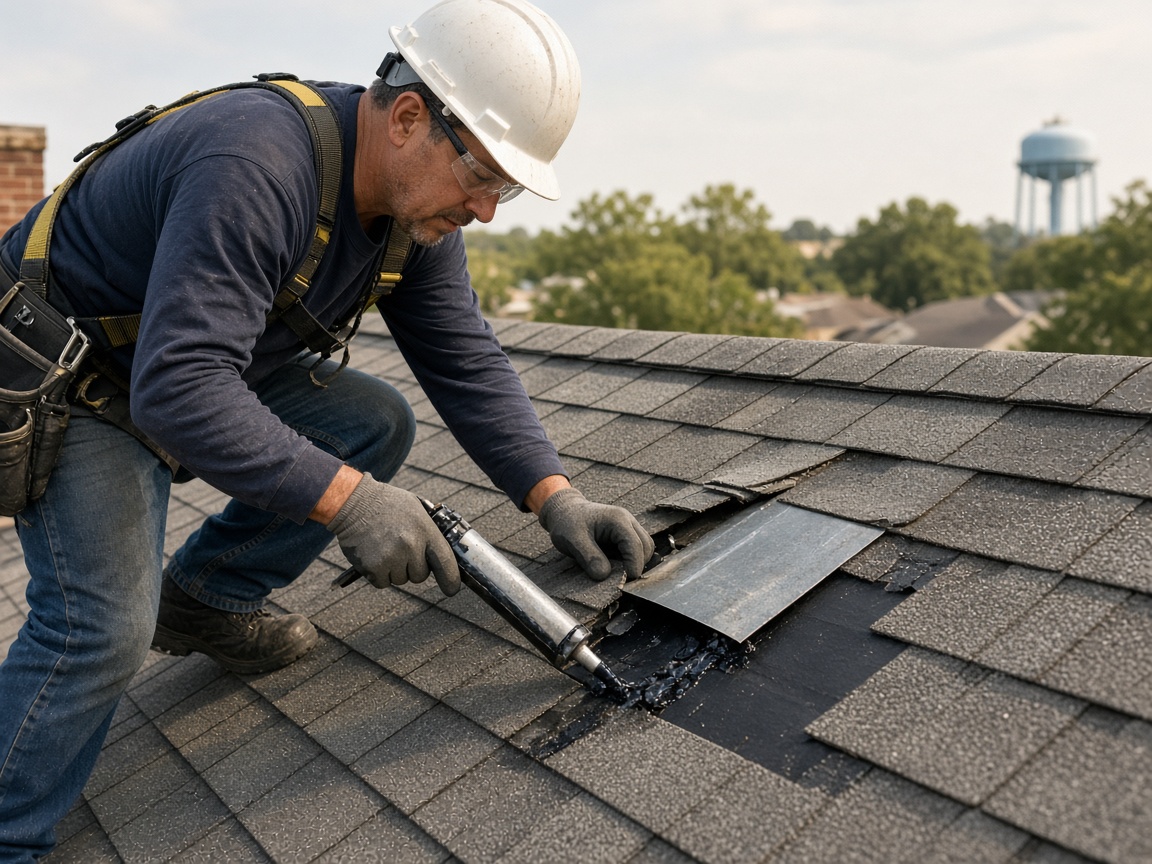
Waco's hot humid summers and spring storms drive most roof leaks through damaged flashing around chimneys, skylights, and valleys on homes built before 1970 in neighborhoods like Sanger Heights and Dean Highland. These older roofs often use asphalt shingles over skip sheathing, so water finds its way under lifted tabs and works down to the attic decking. The pros we connect you with inspect from the ridge down, checking for rot at the eaves where McLennan County humidity keeps moisture trapped longer than in drier nearby Temple or Killeen.
Leaks near Baylor University and the Waco Suspension Bridge area frequently trace to wind-driven rain under ridge caps or failed step flashing on sidewalls. In East Waco and North Waco, tree cover from Cameron Park drops limbs that puncture shingles during storms, creating small entry points that expand with repeated wetting. Proper repair means removing affected shingles, drying the deck, and installing new underlayment before matching the existing material rather than simply coating over the spot.
South Waco and West Waco properties sit on slightly higher ground but still see leaks where gutters overflow during heavy spring downpours and water backs up under the first course of shingles. The pros we connect you with always pull a few courses to inspect for hidden deck damage instead of assuming surface fixes will hold through another humid summer. This approach prevents mold growth in attics that stay warm and moist for months after the initial storm.
Code requirements in McLennan County call for proper flashing integration at all penetrations, and skipping this step on older homes leads to callbacks within a single season. The pros we connect you with match existing shingle profiles and colors so the repair blends without drawing attention on streets lined with Craftsman and mid-century homes.
Technician insight
In Waco, the thing that catches most people out with Roof Leak Repair is assuming a spot of tar on the outside will fix it when the real issue is failed step flashing on the sidewalls of 1950s homes in Sanger Heights. Spring storms push water sideways under those layers, and the humidity keeps the deck wet long enough for rot to spread before homeowners notice.
East Waco Storm Leak
Heavy spring rain pushed water under lifted shingles on a 1960s home near the Waco Suspension Bridge. Inspection showed rot along the valley and under the chimney flashing. The pros we connect you with replaced the damaged deck section, installed new step flashing, and restored the shingles so the attic stayed dry through the following humid summer.
How it works
- 1
Initial Assessment
The pros we connect you with examine the roof from both inside the attic and on the surface, noting water stains, damaged flashing, and any soft decking in Waco's older housing stock.
- 2
Targeted Removal
Affected shingles and underlayment are removed down to solid decking, with extra care taken around valleys and penetrations common on homes near Magnolia Market and Dr Pepper Museum.
- 3
Deck Repair and Drying
Any rotted sections are replaced and the area is allowed to dry fully before new materials go down, accounting for McLennan County's lingering humidity after spring storms.
- 4
Flashing and Shingle Integration
New step flashing and underlayment are installed to match existing layers, then shingles are replaced to blend with the surrounding roof on neighborhoods like Dean Highland.
Pricing
Cost depends on roof access, extent of deck damage, and whether specialty flashing or matching materials are required for older Waco homes.